当前位置:首页 >> Party Building
(The Shenzhen News Network report is reprinted as follows.)
Pinghu Leverages Party Building Leadership to Strive to Build a Harmonious Hospital

Shenzhen Overseas Chinese Hospital (formerly Shenzhen Shenlian Hospital) was founded in 2000 and established its Party branch in 2001. It was one of the first Party organizations in “two new” organizations established in Pinghu Subdistrict. After nearly 16 years of continuous development and growth, it was upgraded to a Party general branch in June 2013, with four branches under it, 36 full Party members and more than 10 mobile Party members, with an average age of 43.
As a “National Hospital Trusted by the People” and a “National Honest and Trustworthy Private Hospital,” over the years the Party general branch of Shenzhen Overseas Chinese Hospital has always adhered to the concept that grasping Party building means grasping development and service. It has continuously innovated working ideas, built work platforms, and focused on giving play to the Party organization’s role as the political core and political guide, adding luster to the Party flag.
Use Party building to lead mass organization building and continuously strengthen the development of mass organizations.
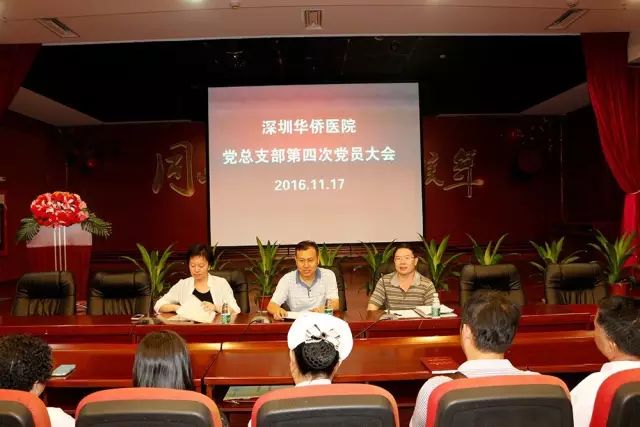
Leading Mass Organization Building Through Party Building and Continuously Strengthening the Development of Mass Organizations
The predecessor of the hospital’s Party branch was the Mobile Party Members Party Branch of Shenlian Hospital. It was established in 2001 under the guidance of a higher-level Party branch and was among the earliest primary-level Party organizations established in private hospitals across the city. At that time, there were only about 10 Party members. At the end of 2002, after the Organization Department of the CPC Shenzhen Municipal Committee and the Shenzhen Municipal Health Bureau jointly issued the Notice on Strengthening Party Building in Private and Shenzhen-based Medical Institutions, the branch took a series of effective measures to address weak links in the hospital’s Party building work and worked hard to advance the development of the Party membership ranks.
First, it encouraged Party members without certification letters, especially so-called “pocket” Party members, to promptly reveal their identities and move closer to the organization. Second, it did ideological work with mobile Party members who had been formally employed (with signed contracts) by the Human Resources Department, suggesting that they take the initiative to transfer their organizational relations. Third, it actively carried out various forms of Party member activities and regularly held organizational life, which filled Party members who had long drifted outside the Party organization with joy and gave them the warm feeling of finding the organization and finding home. Fourth, in organizational work, it attached importance to recruiting Party members, especially among young doctors and nurses on the clinical frontline. Since 2005, the general branch has trained and developed more than 10 young Party members, who are now all backbones of their departments and core forces in our hospital. In 2017, one probationary Party member will become a full member, and one young employee has been identified as an active applicant for Party membership. Another three young employees have submitted applications for Party membership to the branch and are currently being cultivated and assessed. In 2016, the Dahuanggong Park Area Party Committee was established, and the general branch of Overseas Chinese Hospital was incorporated into it. Hu Mingyan, secretary of the hospital’s general branch, served as secretary of the park area Party committee.
While doing a good job in Party organization building, the hospital’s Party organization also acted in accordance with the spirit of relevant meetings and documents of higher-level Party committees on “Party building leading trade union building” and “joint Party-trade union building.” In October 2005, it facilitated the establishment of the hospital’s trade union, with Party cadres serving concurrently as chairman and vice chairman. In 2008, it carried out a survey of Communist Youth League members, established the hospital’s Communist Youth League organization and Women Workers Committee, with one Party member concurrently serving as League branch secretary and another Party member concurrently serving as deputy director of the Women Workers Committee. The hospital’s annual cultural and sports activities were all led, planned, and hosted by the Party branch and the Communist Youth League, allowing Party members both to exercise their bodies and cultivate their sentiments.
In light of the fact that young female employees make up the majority of the hospital, and in order to relieve their worries, the Party general branch and the League branch frequently carried out social and networking activities with sister organizations and contracted organizations, helping to matchmake young friends for marriage. So far, more than 10 young couples have successfully established happy small families and live and work in contentment in the enterprise. Through the unremitting efforts of the general branch committee and all Party members, the cohesion, combat effectiveness, and creativity of the general branch have continuously increased. The political core role of the Party organization has driven a group of people, especially young medical staff, to actively move closer to the Party organization. In their work, they take Party members and exemplary role models as examples, study diligently, work hard without complaint, and make selfless dedication. A group of outstanding employees has emerged. Of the employees who receive honorary titles such as Top Ten Employees and Outstanding Nurses each year, nearly half are Party members and Communist Youth League members. They receive commendations from the hospital every year and, led by the hospital chairman, visit scenic spots outside the province, which stimulates employees’ enthusiasm for work.
Do a good job in the ideological education of Party members and guide them to strive for excellence and take the lead.
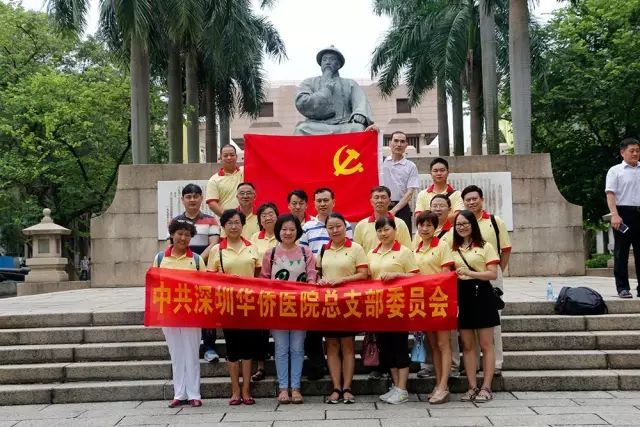
Do a Good Job in the Ideological Education of Party Members and Guide Them to Strive for Excellence and Take the Lead
The hospital’s Party general branch attaches importance to the ideological education of Party members. In light of the characteristics of the medical profession, it has adopted various forms to strengthen the ideological development of Party members and employees, providing a guarantee for the hospital’s harmonious development.
First, strengthen education in revolutionary traditions. Over the past 16 years, the general branch has persisted in organizing Party members every year to visit and study at provincial and municipal red sites and patriotic education bases. They have visited the Opium Burning Memorial Hall in Humen, Dongguan; the former site of the Dongjiang Column Headquarters in Pingshan, Longgang; Yangtai Mountain in Bao’an; the Dongjiang Column Memorial Hall in Luofu Mountain, Huizhou; Shenzhen Museum; the Guangzhou Uprising Martyrs’ Cemetery; the Sun Yat-sen Memorial Hall; the Peasant Movement Institute; the former site of the Whampoa Military Academy; and the Tomb of the 72 Martyrs at Huanghuagang, among others. They also persist in carrying out activities to review the Party admission oath and Party day activities before July 1 every year. The hospital also actively participates in various activities organized by Pinghu Subdistrict, such as the “Fun Sports Meet” and visits to Baolong Industrial Park. Since the establishment of the hospital’s Party branch, for the annual Party day outing visits and study activities, the chairman has personally arranged for a principal person in charge of the hospital to lead the group, provided vehicles and personnel, and covered lunch and dinner. As long as he is not on a business trip, he personally goes to the restaurant to hold discussions and have dinner with Party members, providing the strongest support for the hospital’s Party building work.
Second, strengthen “Two Studies, One Action” education. They conscientiously carry out thematic education through the “three meetings and one lesson,” and take seriously intra-Party activities such as organizational life meetings and “Party member activity days.” The broad ranks of Party member medical staff regulate their words and deeds according to the standards of the Party Constitution and shape their image through good medical ethics and medical skills. In the “Two Studies, One Action” activities, they actively guide Party members to implement the service concept of “speaking of medical ethics, fulfilling medical responsibilities, and putting patients at the center” in their work. Every Party member gives full play to an exemplary role, studies conscientiously, works pragmatically, makes contributions based on their post, and strives to be a qualified Party member. Party member employees wear Party badges on duty and consciously accept supervision by the masses. Veteran Party member experts and medical and nursing staff actively participate in volunteer services, large community free clinics, and social welfare activities, showing love to society and establishing good prestige among the masses.
Third, strengthen medical ethics and professional conduct education. In light of the hospital’s characteristics, in terms of work style development, the hospital’s Party organization first placed the activity of creating a “Demonstration Hospital for Medical Ethics and Professional Conduct” on its important agenda. It once invited Comrade Xu Guoguang, former deputy director of the Municipal Health Bureau, to lecture to all hospital staff on the topic “Strengthen Medical Ethics and Professional Conduct, Create an Honest and Trustworthy Private Hospital,” providing professional, ethical, and legal education. It advocates that employees carry forward the Bethune spirit, carry forward the fine tradition of healing the wounded and rescuing the dying and curing diseases and saving lives, and learn from Comrade Guo Chunyuan of Shenzhen Pingle Orthopedic Hospital, cultivating good medical ethics and professional conduct. This has enhanced the consciousness of Party members and employees in self-education, self-management, self-improvement, and self-examination and self-discipline. In the development of medical ethics and professional conduct, the Party organization also put forward the goal of “strengthening internal qualities and building a good external image,” making “patient-centered and patient-satisfied” the primary task for all Party members and employees, and their service awareness has continuously increased. In their daily work, they have achieved the practice of not accepting, not wanting, and not being tempted by red envelopes given by patients. For red envelopes that cannot be refused, they consciously hand them over to the inpatient department, finance office, or the responsible leader. A large number of experts and nursing staff with zero complaints have emerged in the hospital, and local people come to seek medical treatment because of its reputation, laying a good foundation for the hospital’s healthy and harmonious development.
Strengthen Care and Support and Build a Service-Oriented Party Organization
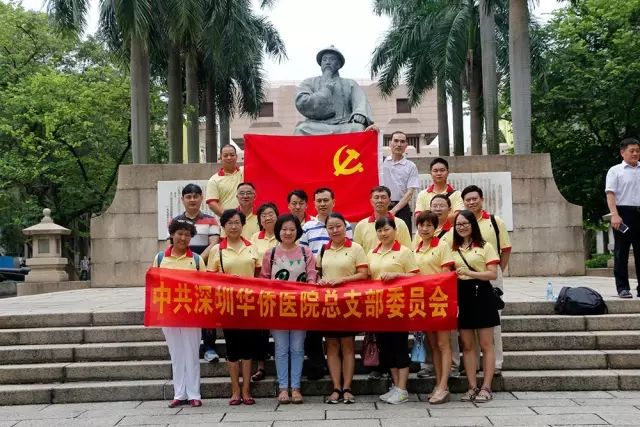
Strengthen Care and Support and Build a Service-Oriented Party Organization
The hospital’s Party general branch attaches importance to the ideological education of Party members. In light of the characteristics of the medical profession, it has adopted various forms to strengthen the ideological development of Party members and employees, providing a guarantee for the hospital’s harmonious development.
First, strengthen education in revolutionary traditions. Over the past 16 years, the general branch has persisted in organizing Party members every year to visit and study at provincial and municipal red sites and patriotic education bases. They have visited the Opium Burning Memorial Hall in Humen, Dongguan; the former site of the Dongjiang Column Headquarters in Pingshan, Longgang; Yangtai Mountain in Bao’an; the Dongjiang Column Memorial Hall in Luofu Mountain, Huizhou; Shenzhen Museum; the Guangzhou Uprising Martyrs’ Cemetery; the Sun Yat-sen Memorial Hall; the Peasant Movement Institute; the former site of the Whampoa Military Academy; and the Tomb of the 72 Martyrs at Huanghuagang, among others. They also persist in carrying out activities to review the Party admission oath and Party day activities before July 1 every year. The hospital also actively participates in various activities organized by Pinghu Subdistrict, such as the “Fun Sports Meet” and visits to Baolong Industrial Park. Since the establishment of the hospital’s Party branch, for the annual Party day outing visits and study activities, the chairman has personally arranged for a principal person in charge of the hospital to lead the group, provided vehicles and personnel, and covered lunch and dinner. As long as he is not on a business trip, he personally goes to the restaurant to hold discussions and have dinner with Party members, providing the strongest support for the hospital’s Party building work.
Second, strengthen “Two Studies, One Action” education. They conscientiously carry out thematic education through the “three meetings and one lesson,” and take seriously intra-Party activities such as organizational life meetings and “Party member activity days.” The broad ranks of Party member medical staff regulate their words and deeds according to the standards of the Party Constitution and shape their image through good medical ethics and medical skills. In the “Two Studies, One Action” activities, they actively guide Party members to implement the service concept of “speaking of medical ethics, fulfilling medical responsibilities, and putting patients at the center” in their work. Every Party member gives full play to an exemplary role, studies conscientiously, works pragmatically, makes contributions based on their post, and strives to be a qualified Party member. Party member employees wear Party badges on duty and consciously accept supervision by the masses. Veteran Party member experts and medical and nursing staff actively participate in volunteer services, large community free clinics, and social welfare activities, showing love to society and establishing good prestige among the masses.
Third, strengthen medical ethics and professional conduct education. In light of the hospital’s characteristics, in terms of work style development, the hospital’s Party organization first placed the activity of creating a “Demonstration Hospital for Medical Ethics and Professional Conduct” on its important agenda. It once invited Comrade Xu Guoguang, former deputy director of the Municipal Health Bureau, to lecture to all hospital staff on the topic “Strengthen Medical Ethics and Professional Conduct, Create an Honest and Trustworthy Private Hospital,” providing professional, ethical, and legal education. It advocates that employees carry forward the Bethune spirit, carry forward the fine tradition of healing the wounded and rescuing the dying and curing diseases and saving lives, and learn from Comrade Guo Chunyuan of Shenzhen Pingle Orthopedic Hospital, cultivating good medical ethics and professional conduct. This has enhanced the consciousness of Party members and employees in self-education, self-management, self-improvement, and self-examination and self-discipline. In the development of medical ethics and professional conduct, the Party organization also put forward the goal of “strengthening internal qualities and building a good external image,” making “patient-centered and patient-satisfied” the primary task for all Party members and employees, and their service awareness has continuously increased. In their daily work, they have achieved the practice of not accepting, not wanting, and not being tempted by red envelopes given by patients. For red envelopes that cannot be refused, they consciously hand them over to the inpatient department, finance office, or the responsible leader. A large number of experts and nursing staff with zero complaints have emerged in the hospital, and local people come to seek medical treatment because of its reputation, laying a good foundation for the hospital’s healthy and harmonious development.
Strengthen Care and Support and Build a Service-Oriented Party Organization
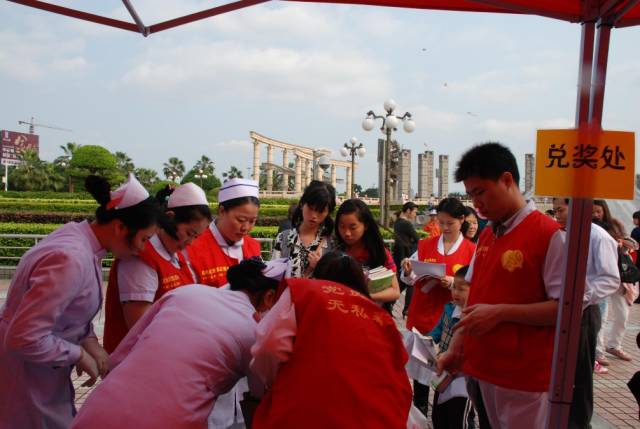
Strengthen Care and Support and Build a Service-Oriented Party Organization
The Party general branch of Shenzhen Overseas Chinese Hospital takes building a service-oriented Party organization as the starting point and ultimate goal of its Party building work. Through a series of care and support activities, it strengthens the service concept and strives to ensure that activities are “joined by Party members, supported by the owner, and welcomed by employees.”
First, carry out Party member volunteer services. In light of the characteristics of the medical profession, the hospital’s Party organization implements the “Two Studies, One Action” work in actual posts, using the professional skills of medical workers to protect the health of surrounding residents, which has won unanimous praise from residents. The Party general branch has formulated a series of free clinic activities planned by Party member volunteers and participated in by Party members from each branch, ensuring arrangements and activities every month. For example, in March it carried out a “Caring for Women’s Health” free clinic activity; in April, a “Cancer Prevention and Treatment Week” free clinic activity; in May, a large free clinic activity titled “Health Walking with You on May 12 Nurses’ Day and the 16th Anniversary of the Hospital”; it held a Children’s Day activity and donated money to hearing-impaired children at the Qingqing Speech Rehabilitation Service Center in Luohu District; in June, it carried out a “Caring for the Elderly, Entering the Community” free clinic activity and an “First Aid Knowledge Lecture Entering the Community” activity; in July, a free clinic activity in Pinghu Community; in August, a free clinic activity in Egongling Community; in September, voluntary blood donation, oral examinations at Nanyuan Primary School on Love Teeth Day, and community free clinic activities; in October, health checkups for elderly returned overseas Chinese from Hong Kong; in November, a free clinic at Weilifeng Factory and free clinic consultation activities on AIDS Day; and in December, a free clinic activity in Shanwei. The free clinic activities of Party member volunteers were welcomed and praised by citizens, helped eliminate some citizens’ hidden disease risks, strengthened citizens’ awareness of health and hygiene, effectively prevented disease, and helped people enjoy healthy and happy lives.
Second, launch the migrant worker health express service. At the initiative of the hospital’s Party branch, the hospital signed contracted medical agreements with more than 150 factories and enterprises in Pinghu Subdistrict to provide convenient, fast, and efficient medical and health care services for migrant workers, and opened a health express service for them. Dedicated vehicles provide free transportation for factory migrant workers to the hospital for physical examinations, medical consultations, hospitalization, and discharge. It also irregularly organizes Party members to go to companies and factories to carry out preventive health care knowledge publicity, consultations, and free clinic activities. The hospital has also established a convenience service system, such as specially purchasing an ambulance for its five subordinate community health centers to transport patients to the hospital for examinations and inpatient treatment, and providing free vehicle pick-up and drop-off services for women giving birth in the hospital.
Third, establish a volunteer team serving overseas Chinese. As a deputy to the Shenzhen Municipal People’s Congress and a member of the overseas Chinese community, the hospital chairman has deep feelings for “overseas Chinese.” At the initiative of the Party organization, the hospital established Shenzhen’s first volunteer team serving overseas Chinese in 2014. Most of the team members are Party members and veteran experts. In Bao’an, Longgang, and Guangming, they held hundreds of large-scale free clinics and consultation activities for overseas Chinese community members. For two consecutive years, they organized medical teams to go to Malaysia to provide free clinics and traditional Chinese medicine cultural exchanges for local overseas Chinese, receiving a warm welcome from the broad overseas Chinese community. Assigned by the Overseas Chinese Affairs Office of the State Council, in 2014, 2015, and 2016, for three consecutive years, they provided medical and health services for elderly returned overseas Chinese of the Hong Kong Federation of Overseas Chinese Associations and the Macao Returned Overseas Chinese Association. After each batch of physical examinations, the hospital would send expert teams to Hong Kong and Macao to explain the detailed physical examination reports for the elderly returned overseas Chinese, helping them understand their own physical conditions and daily health care precautions. The hospital’s excellent service won praise from the Overseas Chinese Affairs Office of the State Council and the elderly returned overseas Chinese.
Fourth, care about the lives of Party members and employees in difficulty. When a female Party member was hospitalized for a cesarean section, members of the hospital’s Party general branch immediately paid out of their own pockets to buy nutritional supplements and deliver them to her bedside, so that when she woke up after surgery, the first thing she felt was the organization’s care. When a middle-aged couple in the hospital was divorcing, Party members patiently mediated, steering the shaky ship of their marriage toward the calm harbor of happiness. When a mobile Party member’s mother passed away, the Party general branch sent representatives to deliver a wreath and went to the funeral parlor to see the elderly person off, deeply moving the old comrade. The hospital’s Party general branch and the trade union, youth league, and women’s organizations also gave help within their capacity in areas such as employee household registration and children’s schooling, allowing employees to personally feel the warmth of the organization.
 Appointment Service
 Traffic Guide
 Medical Notice